
What is intangible heritage?
Share
When we talk about heritage, the collective imagination spontaneously turns to tangible heritage: cathedrals, castles, works of art. These tangible cultural assets constitute the most visible part of our heritage. Yet, alongside these stone buildings, there exists a category of heritage that is just as fundamental, but much more fragile and dynamic: Intangible Cultural Heritage (ICH).
A living memory recognized by UNESCO
Intangible Cultural Heritage, formalized by the 2003 UNESCO Convention, encompasses the practices, representations, expressions, knowledge, and skills that communities recognize as integral to their heritage. It is not about objects or monuments, but rather all the elements that give a group its cultural identity.
The ICH is divided into five main areas, as defined by the Convention:
-
Oral traditions and expressions (including language).
-
The performing arts (music, dance, theatre).
-
Social practices, rituals and festive events.
-
Knowledge and practices concerning nature and the universe.
-
The skills associated with traditional crafts.
Gesture as a vehicle for history
Unlike tangible heritage, which is fixed in stone or archives, intangible cultural heritage (ICH) is a moving memory. It is transmitted not through preservation, but through execution and learning.
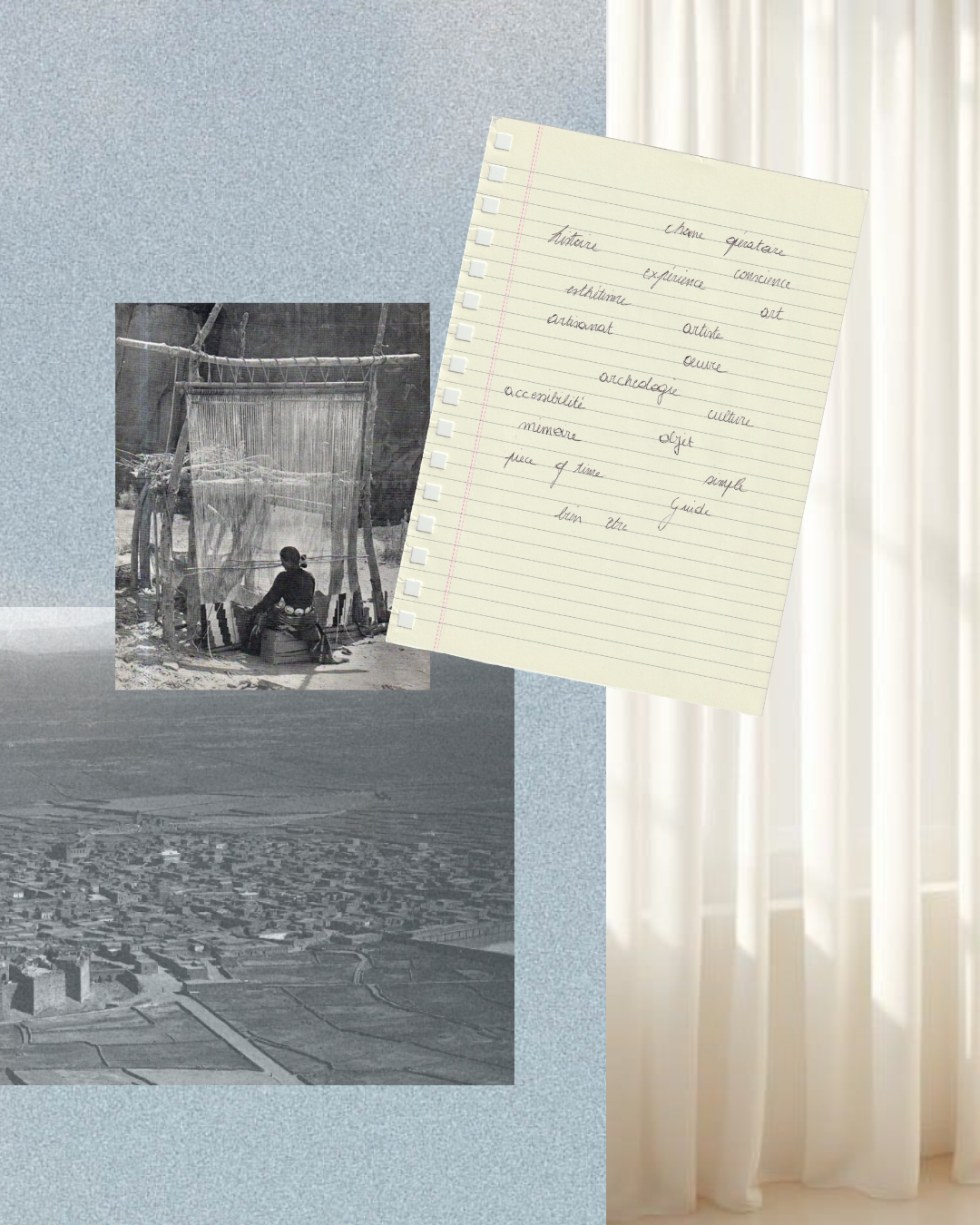
Let's take the example of weavers' know-how. This ancestral skill is more than just a technique: it conveys a body of symbolic knowledge, dyeing methods, and motifs that tell the story of a community. When an artisan perpetuates this skill today, they ensure the continuity of a tradition, proving that intangible cultural heritage is intrinsically linked to human action and intergenerational transmission.
An economic challenge: to ensure the long-term viability of the expertise
The very nature of intangible cultural heritage makes it particularly vulnerable. While a monument can be restored after centuries, a forgotten skill or language disappears forever if the chain of transmission is broken.
Given this fragility, preservation efforts must be proactive and often involve financial support. Initiatives such as cultural promotion and the marketing of handcrafted or artistic objects then become crucial, as they transform an inherited skill into a viable profession.
This link between transmission, culture and market is fundamental for the future of practices.
Backup challenges: vulnerability and identity
In a context of globalization and cultural homogenization, the recognition and protection of Intangible Cultural Heritage are essential acts. They not only allow us to safeguard the cultural diversity of humanity, but also to strengthen the sense of identity and continuity within the communities that practice it.
Therefore, PCI backup does not involve physical restoration, but rather:
-
Active transmission (teaching).
-
Revitalization (encouraging practice).
-
Economic valorization (ensuring market opportunities for knowledge holders).
The question is no longer whether it is important, but to determine: How to integrate the appreciation of this living and intangible heritage into the heart of modern cultural policies and private initiatives that give it a concrete future?